Motorcycle Just Clicks When Trying to Start? Why Your Starter Relay is the CulpritNew Product
We’ve all been there. It’s a beautiful morning, you’re fully geared up, you turn the key, hit the ignition button, and instead of the glorious roar of your engine, you hear it: Click. Just one single, mocking click from under the seat. The engine doesn’t crank. Nothing happens.
Before you start tearing apart your engine or dropping hundreds of dollars on a brand-new starter motor, take a deep breath. In the vast majority of cases, the dreaded “click of death” points to a much smaller, cheaper, and easily replaceable component: the starter relay (also known as the starter solenoid).
Here is everything you need to know about why your motorcycle is clicking, how to test the relay in your garage, and how to fix it fast.
What is a Starter Relay, Anyway?
To understand why it breaks, you need to know what it does.
Your motorcycle’s starter motor requires a massive amount of electrical current from the battery to turn over the engine. If that massive current flowed directly through the small plastic start button on your handlebars, the button would instantly melt.
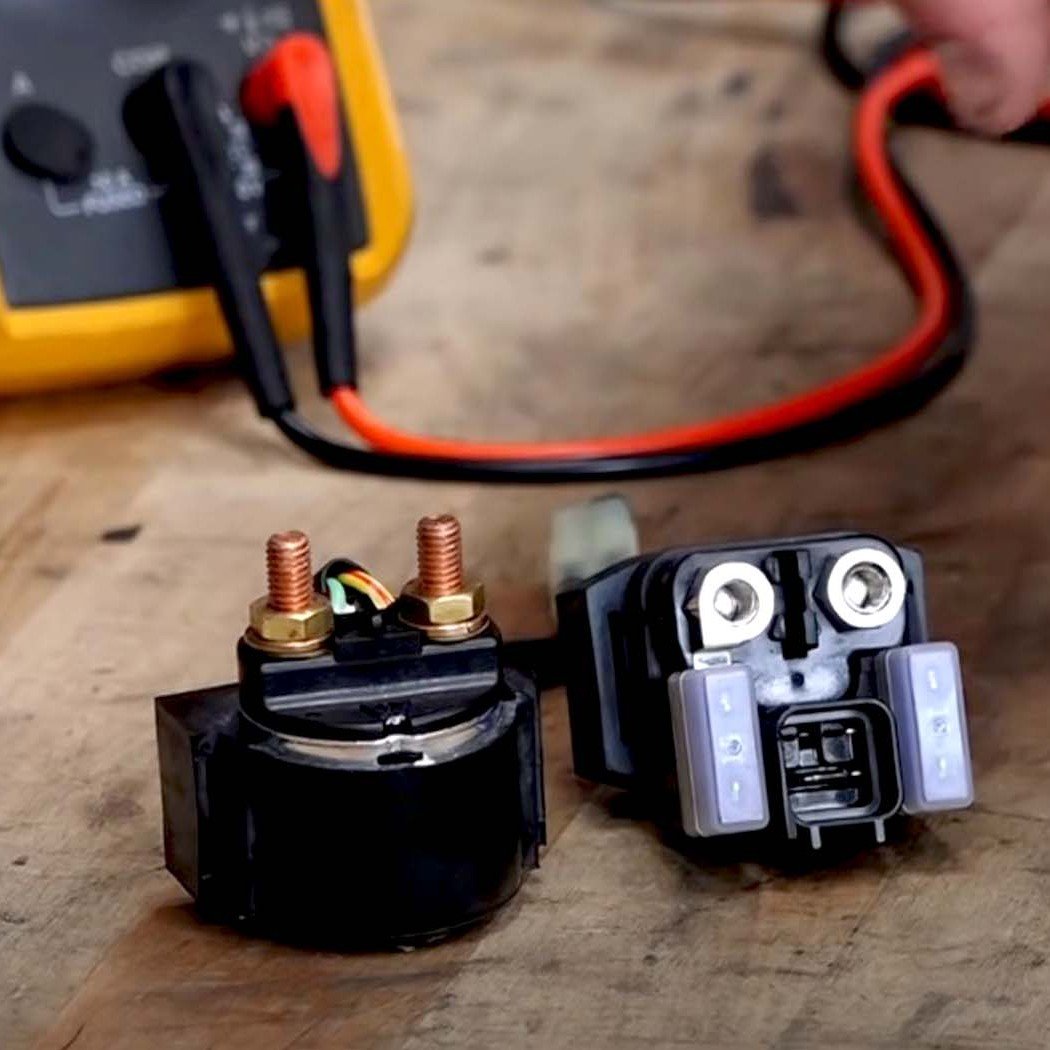
Enter the starter relay. It acts as a heavy-duty bridge. When you push the start button, it sends a tiny, safe electrical signal to the relay. The relay then uses an internal electromagnet to snap a heavy metal contact shut, allowing the massive battery power to flow safely to the starter motor.
That “click” you hear? That’s the sound of the electromagnet inside the relay engaging.
Dead Battery vs. Dead Relay: Knowing the Difference
Many riders confuse a bad relay with a dead battery. Here is the easiest way to tell them apart by sound:
- Rapid Clicking (Click-click-click-click): If you hear a rapid machine-gun sound and your dashboard lights dim significantly, your relay is trying to work, but your battery is too weak to hold the connection closed. Check your battery voltage first.
- One Single Click (Click.): If you hear one solid, loud click, your dashboard lights stay bright, and the starter motor does absolutely nothing, your battery is fine. The electromagnet in the relay is working, but the internal metal contacts are burnt, corroded, or destroyed. The bridge is broken.
How to Test Your Starter Relay (The Screwdriver Trick)
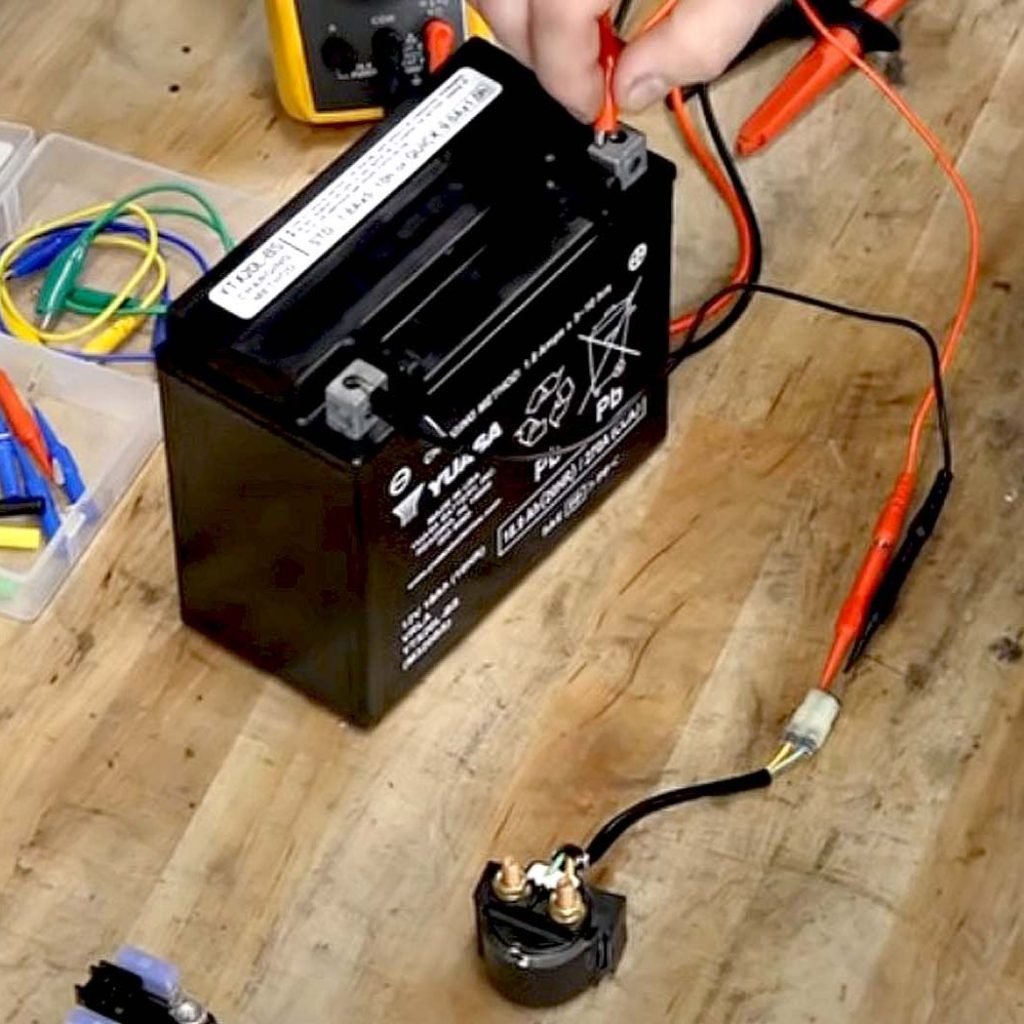
As a mechanic, this is my favorite way to diagnose a bad relay because it takes 30 seconds and requires almost no tools.
Warning: Ensure your motorcycle is in NEUTRAL before doing this. You will be bypassing the safety switches, and you do not want the bike lunging forward.
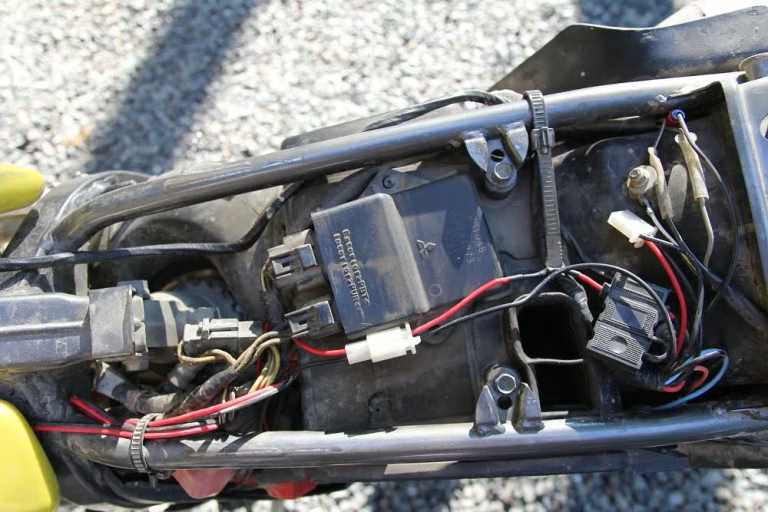
- Locate the Relay: Follow the thick red wire from your battery’s positive (+) terminal. It will lead you directly to the starter relay, usually located under the seat or behind a side cover.
- Expose the Terminals: Pull back the rubber boots covering the two large metal posts on top of the relay.
- Bridge the Gap: Take a heavy-duty screwdriver with an insulated handle. Firmly touch the metal shaft of the screwdriver across BOTH of the large metal posts at the same time. Expect a few electrical sparks—this is completely normal.
- The Result: * If the starter motor immediately spins and cranks the engine, your relay is 100% dead and needs to be replaced. You just did the relay’s job manually.
- If you bridge the posts and the starter motor still doesn’t spin, your relay might be fine, and your starter motor or ground cable is the problem.
The Fix: Replacing Your Starter Relay
If the screwdriver trick proved your relay is fried, the good news is that replacing it is one of the easiest DIY jobs on a motorcycle.
Simply disconnect the negative battery cable (for safety), unbolt the two main wires from the old relay, unplug the small signal connector, and swap the new unit in. It’s completely plug-and-play.
However, don’t replace a bad relay with a cheap, unsealed knock-off. Starter relays are exposed to moisture, road grime, and extreme heat. A cheap unit will corrode internally and leave you stranded with the “click of death” all over again.
At [Your Website Name], we carry premium, weather-sealed starter relays built with high-quality copper contacts to handle maximum current without burning out. Our OEM-equivalent relays ensure that when you hit the button, your bike roars to life every single time.
Still not sure if your relay is the problem? Describe what your bike is doing in the comments below, and we’ll help you troubleshoot it!